





Digital Tansformation
How Edge to Cloud Is Propelling the Subsequent Phase of Digital Transformation?
Edge to cloud refers to the integration of edge computing and cloud computing to create a seamless, unified computing environment. Edge computing encompasses processing data at the source, such as at a sensor or device, while cloud computing involves processing data in a centralized location, such as a data centre or the cloud. By combining these two technologies, organizations can leverage the strengths of both to create a more effective and efficient computing environment.
Edge to cloud is propelling the subsequent phase of digital transformation by enabling organizations to collect and analyze data in real time, regardless of location. This allows for faster decision-making and more responsive actions, which can improve operational efficiency and customer experience. Additionally, edge to cloud allows organizations to process sensitive data at the edge, reducing the need to transmit it to the cloud, which can improve security and compliance.
Relationship Between Edge Computing and Cloud Computing 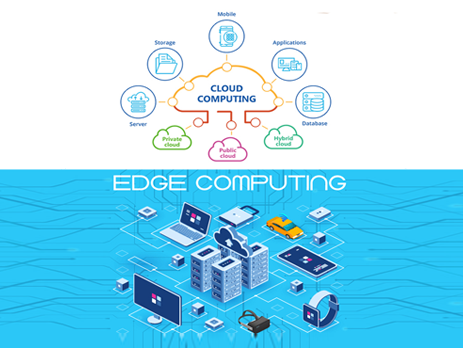
A cloud is an information technology (IT) system that pools and shares IT resources along a network. The edge describes devices located at or close to the physical location of the user or data source. Cloud computing refers to the execution of workloads within clouds, whereas edge computing refers to the execution of workloads on edge devices.
The primary relationship between the two is that Edge computing utilises locally derived data to enable real-time adaptability and the creation of novel experiences, while managing sensitive data and decreasing the expenses of data transmission to the cloud. Cloud computing gathers and collects data from numerous locations, which is then stored in the cloud. Cloud computing is by nature a centralised system. This is what allows it to process data at scale very easily and cost-effectively, saving you a great deal of money.
The vast majority of businesses store and analyse their data in the cloud due to its nearly limitless resources in comparison to the modest and resource-constrained devices located on-site. The capacity of the network has been rising at a considerably slower rate than storage and compute. Once data is uploaded to the cloud, cloud computing can manage data of any size or volume.
Advantages Of an Edge-To-Cloud Platform

What are the qualities of a robust edge-to-cloud platform? When you’re in the market for a solution, you should investigate four essential characteristics: rapid scaling, self-service, pay-as-you-go, and professional infrastructure.
An ideal scenario for using edge computing is that it enables organizations to take advantage of emerging technologies such as IoT, AI, and 5G, which can further enhance digital transformation efforts.
The most crucial factor is increased agility. As we have witnessed over the past three years, the rate of change on the planet may be astounding. the offers and operations must be able to adjust just as quickly to these changes. Having systems that can spin up or down fast will help you achieve the necessary responsiveness in today’s society.
Advantages Of an Edge-To-Cloud Platform

Everything is exceptionally overwhelming. The cloud revolution and the push for digital transformation have resulted in new IT practices that make it possible to manage IT infrastructure as a unified whole, while also making it practical, approachable, and even effortless to spin up new infrastructure and new solutions to meet diverse business requirements. The HPE GreenLake edge-to-cloud platform helps securely link your data to the cloud and convert it into intelligence. Companies began to recognise the benefits of cloud computing and desired to implement them at all infrastructure levels, including warehouses, data centres, shared computer resources, shipping docks, and distant sensors. There are platforms, such as HPE GreenLake, for businesses that do not wish to create all of these systems themselves.
In summary, Edge to Cloud is propelling the next phase of digital transformation by allowing for faster, more efficient, and more secure data processing and analysis, enabling organizations to make better use of emerging technologies, and improving the overall customer experience.